
Safer Internet Day 2026 sparked a nationwide wave of action, bringing together organisations across Kenya to champion safer and more responsible digital experiences for children.
A Wider Reflection Highlighting Progress
Beyond the main event, reflections on progress and ongoing efforts were shared through the Watoto Watch Network social media platforms. In one such communication, the organisation’s Executive Director, Lilian Kariuki, acknowledged the role of law enforcement agencies across the African region in advancing child online safety.
“In Kenya, the DCI, through its specialised unit on child online safety, engaged directly with stakeholders to raise awareness on the child online risks and educating them and the general public on how they can report such incidences. They also visited schools to have direct interactions with the students and teachers and create awareness over the same.”
The remarks pointed to increased collaboration across sectors, even as the need for more coordinated and sustained action continues.

Coming Together for a Better Internet
To mark the day, Watoto Watch Network, in partnership with Amnesty International Kenya, convened a meeting at the Sarova Stanley Hotel in Nairobi, bringing together key stakeholders and actors in child protection and digital safety space to strengthen ongoing conversations around online safety.
Discussions centred on practical concerns with participants calling for stronger support systems for children affected by online harm. There was also emphasis on equipping law enforcement officers with the skills needed to handle cybercrime, including offences linked to emerging technologies such as Artificial Intelligence (AI).
Other contributions pointed to the responsibility of developers to design platforms with children in mind, alongside the need to deepen awareness efforts within schools. The conversations reflected a growing recognition that online safety cuts across homes, classrooms and institutions.
Key moments from organisations working to protect children online.
Reflecting collaboration, awareness, and practical interventions.
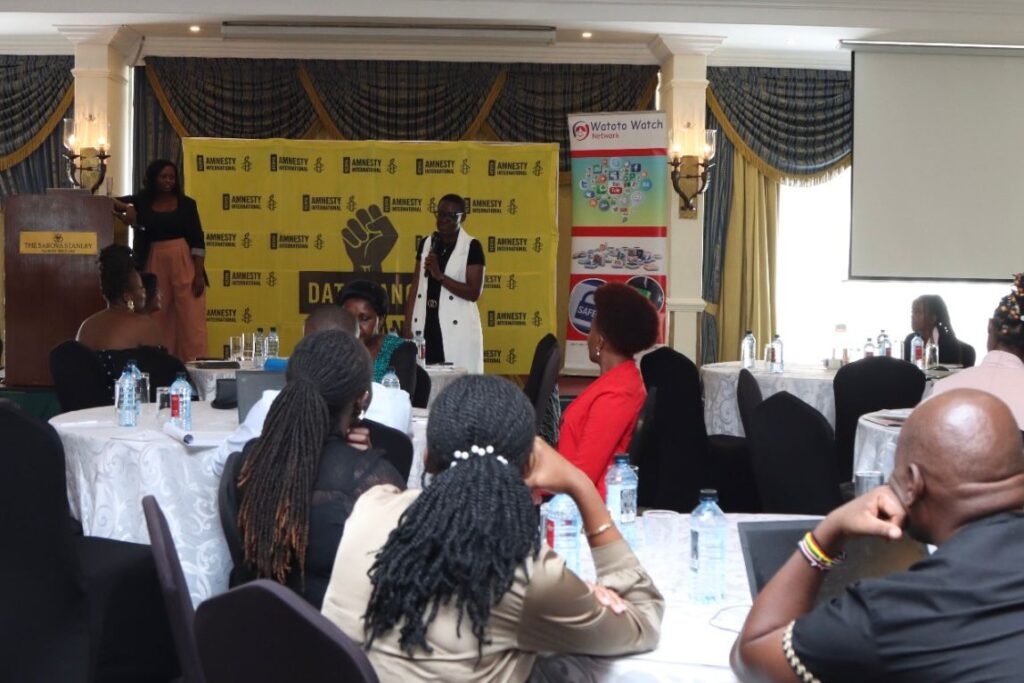
Engagements on 10 February, 2026
On the day itself, several organisations marked Safer Internet Day through diverse initiatives. Watoto Watch Network and Amnesty International Kenya convened a stakeholders’ meeting in Nairobi, while Sister Brother Love C.B.O, in collaboration with the DCI, engaged students at Dandora High School. Mtoto News also hosted a town hall session at Mbagathi Girls School, bringing together 500 learners. In Mathare, the Children Rights Advocacy and Legal Aid Foundation (CRALAF) conducted school sessions at Kiboro Comprehensive and Valley View School, creating space for meaningful discussions with learners.

Post-Event Engagements (Mid–Late February 2026)
Following 10 February, activities continued with increased momentum. A two-day civil society training on data protection was held at Amnesty International offices, alongside the launch of an online essay platform, Voices Online: Courage, Silence and Harassment. Additional efforts included the Own Your Own Digital World forum organised by key stakeholders at Nairobi Cinema, as well as teacher trainings, parent engagements, webinars, and awareness sessions led by institutions such as the Anglican Church of Kenya.

Continued Momentum into March 2026
The engagements extended into early March, highlighting the commitment to sustained awareness. Tabasamu Na Upendo concluded its Safer Internet Month activities on 7 March at AIC Kajiado Girls through mentorship and training on online safety and digital literacy. These continued efforts underscored the importance of keeping conversations around child online protection active beyond a single day
A Collective Role in Building a Safer Internet
In the lead-up to Safer Internet Day, Watoto Watch Network emphasised the importance of shared responsibility in shaping a safer digital environment. The organisation called on different groups to play an active role in ensuring that the internet remains a space that connects, empowers and protects its users.
Children and young people were encouraged to engage responsibly online by showing respect, protecting their digital identity and contributing positively through their interactions.
Parents and caregivers were urged to remain present and involved by fostering open conversations and guiding children in their online experiences.
Educators and social workers were called upon to strengthen digital literacy and critical thinking, helping learners make informed choices and navigate online spaces safely.
Industry players were encouraged to prioritise child-friendly design, offer clear safety guidance and provide accessible protection tools.
At the policy level, leaders and decision-makers were urged to support stronger frameworks that integrate online safety into education systems and broader child protection efforts.
Looking Ahead…
Thirteen years into Kenya’s participation in Safer Internet Day, the focus continues to shift from awareness to action.
Watoto Watch Network maintains that online safety goes beyond understanding risks and calls for deliberate steps to protect children in digital spaces.
As the internet continues to evolve, so too must the commitment to making it safer. That responsibility rests with everyone, from individuals to institutions, each playing a part in shaping a more secure digital future for children and young people.